

The first step toward getting somewhere is to decide you are not going to stay where you are. Quitting nicotine starts with that same mindset. It’s a choice to move forward and take back control of your life. While the decision is powerful, the journey that follows can be tough. Your body and mind need time to adjust, and withdrawal symptoms are a natural part of that process. Knowing what to expect can make things feel less overwhelming. This guide breaks down the nicotine withdrawal timeline, so you can stay prepared, focused, and confident every step of the way.
What is Nicotine Withdrawal?
Nicotine is a highly addictive substance found in tobacco products. When you stop using it, your body needs time to adjust to functioning without it. This adjustment period is known as nicotine withdrawal and can involve physical, emotional, and psychological symptoms. The intensity and duration of withdrawal symptoms vary from person to person, but most people will go through similar stages during the quitting process.
Nicotine Withdrawal Timeline
Within 20 Minutes to 2 Hours
- Initial recovery begins: Your heart rate and blood pressure start to drop to normal levels.
- Cravings: The first cravings for nicotine may appear, though they’re usually mild at this stage.
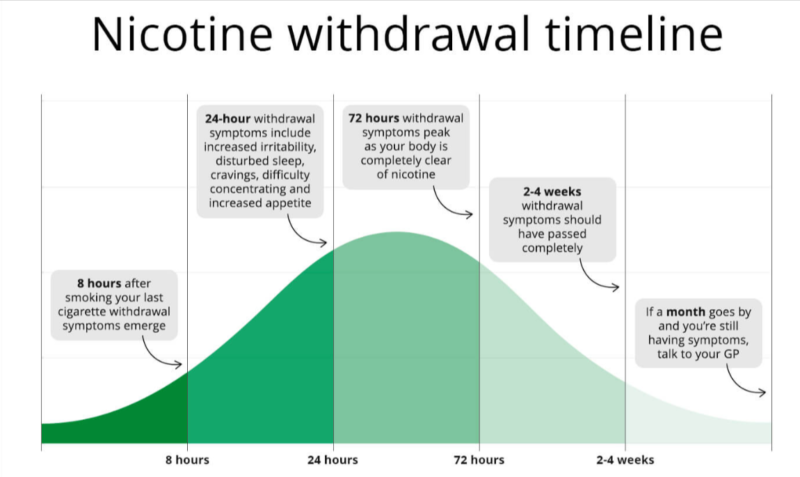
Day 1 to Day 3
- Peak withdrawal symptoms: This is often the most difficult period.
- Symptoms: Irritability, anxiety, headaches, restlessness, and increased appetite are common.
- Nicotine leaves the body: By the end of day 3, most nicotine has been eliminated from your system.
Tip: Stay hydrated, get rest, and avoid triggers like caffeine or alcohol during these days.
Days 4 to 7
- Physical symptoms begin to ease: Headaches and fatigue may lessen, but cravings can still be strong.
- Mood swings: Emotional changes may be more noticeable — including frustration, depression, or anxiety.
- Sleep issues: Insomnia or vivid dreams may occur as your body readjusts.
Week 2 to 4
- Improvement continues: Concentration and mood gradually improve.
- Cravings become less frequent: But they can still appear suddenly, often triggered by stress or routines.
- Lung function improves: Breathing becomes easier, and energy levels may rise.
Note: Regular exercise and healthy eating can help speed up recovery and reduce stress.
Month 2 to 3
- Most withdrawal symptoms subside: Many people feel more stable emotionally and physically by this point.
- Psychological triggers remain: Some cravings may linger, especially in certain social or emotional situations.
- Health benefits noticeable: Circulation improves and coughing and shortness of breath decrease.
After 3 Months and Beyond
- Cravings diminish greatly: Most people experience only occasional, brief cravings.
- Mental clarity returns: Many former smokers report improved memory, focus, and mental sharpness.
- Long-term health gains: Your risk for heart disease, lung conditions, and cancer continues to drop.
Tips to Manage Nicotine Withdrawal
- Stay busy: Engage in hobbies, exercise, or social activities to distract from cravings.
- Use support systems: Talk to friends, join a quit-smoking group, or use apps designed to help.
- Practice relaxation: Deep breathing, meditation, or yoga can ease anxiety and improve mood.
- Consider NRT (Nicotine Replacement Therapy): Patches, gum, or lozenges can ease symptoms if needed.
Conclusion
Nicotine withdrawal can be challenging, but it’s also a clear sign that your body is healing and moving forward. Every craving resisted and every day without nicotine is a step closer to a healthier, smoke-free life. Understanding the timeline helps you stay prepared, and using tools like NRT products can ease the journey. Remember, discomfort is temporary, but the benefits last a lifetime. Stay patient, stay focused, and don’t hesitate to seek support when you need it.